

What Is Monkfish? The "Poor Man's Lobster" Explained

It has one of the ugliest faces in the ocean and one of the best textures on the plate. People call it the poor man's lobster, and once you cook it you understand why. We land monkfish off our own docks in Gloucester, so here is the plain guide to what it is and how to cook it.
This guide covers what monkfish is, why it is called the poor man's lobster, what it tastes like, which part you eat, how to buy it, how to cook the tail, and the famous liver that Japan prizes.
What Is Monkfish?
Monkfish is a firm white fish that lives on the bottom of the Atlantic. The American species is Lophius americanus, and it is also known as goosefish or anglerfish. It has a huge, wide head, a mouth full of long teeth, and a fleshy lure on top of its head that it wiggles to draw prey close before swallowing it whole.
It is not a fish you buy for its looks. You buy it for the meat. Behind that big head is a thick, muscular tail of dense white flesh that behaves more like lobster or scallop than like a flaky fillet.
Our monkfish is wild caught by Atlantic day-boats and comes to us from local fishermen several times a week, so it reaches you about as fresh as fish gets.
- ✓Species: Lophius americanus
- ✓Also called: goosefish, anglerfish, lotte
- ✓Texture: firm, dense, meaty, holds together when cooked
- ✓Nutrition: lean protein with B12, selenium and phosphorus
Why Is Monkfish Called the "Poor Man's Lobster"?
Monkfish is called the poor man's lobster because its meat is firm, dense and sweet in a way that closely resembles lobster, but it usually costs a good deal less. Cook a piece of monkfish tail and a piece of lobster side by side and the resemblance in bite and sweetness is hard to miss.
That is why it is such a useful fish in the kitchen. You can cut it into chunks for a "lobster" roll, drop it into a bisque or chowder, or serve medallions where you might otherwise use scallops. It gives you a lot of that luxury texture at a friendlier price.
What Does Monkfish Taste Like?
Monkfish has a mild, clean, slightly sweet flavour and is not fishy. The taste is delicate, so the texture does most of the talking. It is meaty and satisfying rather than soft and flaky, which makes it feel more like eating shellfish than white fish.
Because the flavour is mild, monkfish is a blank canvas. It takes marinades well and stands up to strong partners such as garlic, chorizo, curry, tomato and white wine without being overwhelmed.

Which Part of Monkfish Do You Eat?
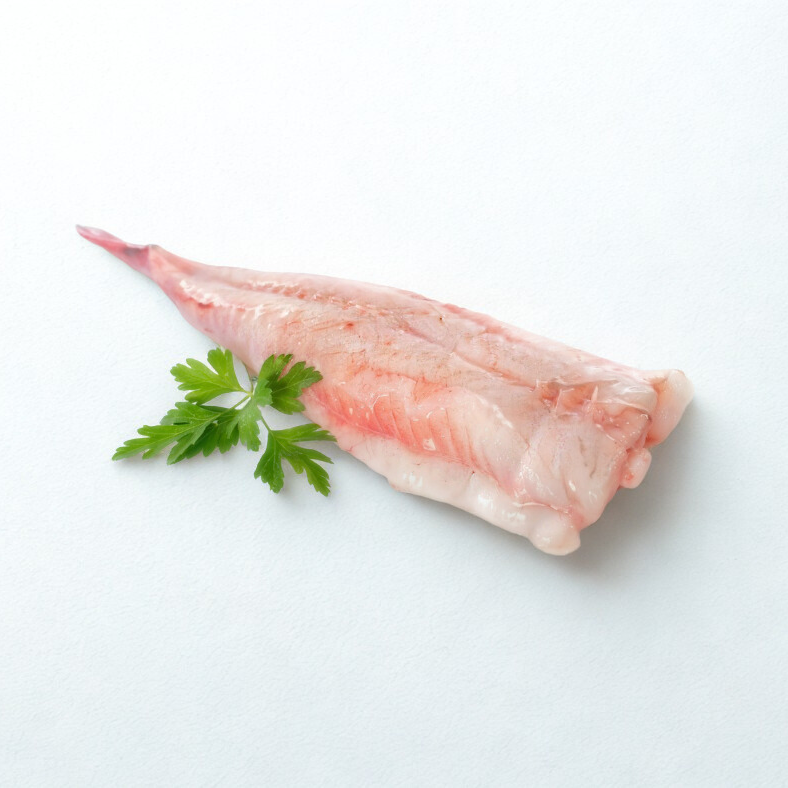
The main part you eat is the tail. That is where the thick, boneless-once-filleted white meat comes from. A monkfish tail has a single central bone running down the middle, with a fillet on each side and no small pin bones to worry about.
There is one more prized part: the liver, known in Japan as ankimo. It is treated as a delicacy and is a separate product from the tail meat. More on that below.
Monkfish Tails vs Fillets: What Should You Buy?
You can buy monkfish on the bone as a whole tail, or already filleted. Both are the same great meat. The choice comes down to how much prep you want to do and what you are cooking.
| Whole Tail (on the bone) | Fillets (off the bone) | |
|---|---|---|
| Prep | Trim membrane, fillet off the bone if needed | Ready to cook, trimmed and boneless |
| Best for | Roasting whole as a centrepiece, the bone adds flavour and keeps it moist | Quick medallions, chunks for stews, skewers, weeknight meals |
| Small fillets | Sleek and tender, defrost quickly, good for pan-seared medallions, "lobster" chunks in curries and chowders, or skewers | |
| Large fillets | Thick, meaty loins for roasting whole, broiling, or carving into steak-like portions for dinner parties | |
All our monkfish is wild caught. Check each product page for current sizes and whether it is fresh or frozen.
The Grey Membrane: Trim It Before Cooking
Fresh monkfish often has a thin grey or blue-grey membrane over the flesh. It is harmless, but if you leave it on it turns chewy and tightens as it cooks, which can make the fish curl and toughen. So it is worth removing.
How Do You Cook Monkfish?
Monkfish is one of the easiest fish to cook because it is so sturdy. It will not fall apart on a hot grill, in a broth, or during a firm pan-sear. The one thing to watch is that it is lean, so it can dry out if you overcook it. Cook it just to done and pull it off the heat.
Here are the ways we recommend, straight from how we prep it:
- ✓Pan-seared medallions: slice the fillet into thick rounds, sear in hot olive oil, then baste with garlic, butter and fresh thyme
- ✓Whole oven-roasted: season the tail whole on the bone, sear in a skillet, then roast at 400°F (200°C) for 20 to 25 minutes
- ✓Stews and curries: cut into chunks for bouillabaisse, cioppino or a coconut Thai curry, where it holds its shape
- ✓Grilled or broiled: the firm flesh takes high, direct heat without breaking down, so it works on skewers too
A simple treatment of olive oil and lemon over high heat is a classic for a reason. It lets the mild, sweet flavour come through without hiding it.
The Prized Liver: Ankimo
There is more to monkfish than the tail. The liver, called ankimo in Japan, is a delicacy in its own right, often described as the foie gras of the sea for its rich, creamy texture. Intershell is the largest buyer and seller of raw monkfish liver in the United States, and most of that raw liver is exported to Japan.
If that side of monkfish interests you, we cover it in full in our guide to ankimo, including what it tastes like, how it is made and how to serve it.
Storing and Thawing Monkfish
Fresh monkfish should go straight into the coldest part of your fridge when it arrives, and it is best eaten within one to two days. Frozen fillets keep in the freezer until you need them, and they are flash-frozen at peak freshness to hold their texture.
To thaw, move it to the fridge, and pat it dry before cooking so it sears well instead of steaming. For shelf life across all our seafood, see our guide on how to store seafood.
Frequently Asked Questions
Shop Monkfish from Gloucester
Wild caught by Atlantic day-boats and landed at our own docks. Whole tails for roasting, trimmed fillets for weeknights, and the prized liver for something special. Review each product page for its current size and preparation details.
More From Intershell
Keep exploring with these guides.