

What Is Ankimo? Monkfish Liver, the Foie Gras of the Sea

For generations, fishermen threw monkfish livers back into the ocean. Today the same liver is one of the most prized items on a Japanese sushi menu. We handle more raw monkfish liver than anyone else in the United States, so this is a guide we can write from the dock up.
This guide covers what ankimo is, what the name means, the fish it comes from, what it tastes like, how it is made, the difference between prepared ankimo and raw monkfish liver, how to eat it safely, and how it is served at sushi restaurants.
What Is Ankimo?
Ankimo is monkfish liver prepared in the traditional Japanese way. The liver is cleaned of its outer membrane and veins, cured with salt, rinsed with sake, rolled into a cylinder and steamed. Once it cools, it firms up enough to cut into neat round slices.
In Japan, ankimo is counted among the chinmi, a word for rare delicacies. It is a classic item at sushi bars and in omakase menus, and it pairs especially well with sake.
The word ankimo refers to the finished dish. The raw ingredient is simply called monkfish liver, and many menus in the United States use both names side by side.
What Does the Word Ankimo Mean?
The name is a joining of two Japanese words. Ankō means monkfish, and kimo means liver. Put together, ankimo literally means monkfish liver. In Japanese it is written 鮟肝.
Which Fish Does Ankimo Come From?
Ankimo comes from the monkfish. In American waters that is Lophius americanus, also known as goosefish or anglerfish. It is not a pretty fish. It has a huge, wide head, a mouth lined with needle-like teeth, and a fleshy lure on top of its head that it dangles to attract prey.
Monkfish live on the Atlantic sea floor, and the US commercial fishery runs from Maine down to North Carolina. They can grow to more than four feet long. Most people know monkfish for its firm white tail meat, sometimes called poor man's lobster. The liver, along with the tail and the whole fish, is one of the main products the fishery lands.

- ✓Species: Lophius americanus, the American monkfish
- ✓Also called: goosefish, anglerfish, lotte
- ✓Our harvest area: Massachusetts state waters
- ✓Wild or farmed: wild caught, listed as available year round
What Does Ankimo Taste Like?
Ankimo is rich, creamy and mild, with a gentle sweetness and a clean ocean finish. It should never taste strongly fishy. The texture is the real draw. A good slice is smooth and velvety, firm enough to hold its shape on the plate, then it melts as soon as you bite into it.
That buttery richness is why it is called the foie gras of the sea. The comparison is about texture and richness, not flavour. Ankimo tastes of the ocean, and it is lighter on the palate than duck or goose liver.
Because it is so rich, it is served in small portions and almost always with something sharp or acidic, such as citrus ponzu, to cut through it.
From Bycatch to Delicacy
For generations, the monkfish liver was treated as an unwanted part of the catch. Fishermen tossed it back into the ocean. Japanese fishermen and chefs saw it differently, and over time they turned it into one of the most valued items in their cuisine.
That demand changed the trade on this side of the Atlantic too. Today Intershell Seafood is the largest buyer and seller of raw monkfish liver in the United States, and most of the raw liver we handle is exported to Japan. The livers that end up on sushi counters in Tokyo very often start their journey on the docks here in Gloucester.

How Is Ankimo Made?
Traditional ankimo takes patience more than skill. The steps look like this:
- 1Clean: strip away the thin outer skin and remove the blood vessels running through the liver
- 2Soak: soak it in cold salted water or sake to draw out any remaining blood
- 3Cure: rub the liver with salt, then rinse it with sake to remove any fishiness
- 4Roll: wrap it tightly into a cylinder so it cooks evenly and slices into clean rounds
- 5Steam: steam or poach it until fully cooked, to an internal temperature of at least 145°F (63°C)
- 6Chill and slice: let it cool so it firms up, then cut it into rounds
Our own prepared ankimo follows the same traditional approach of cleaning, seasoning and steaming, made to our own recipe at our facility in Gloucester. Each liver is shaped into a 5 ounce tube, cooked, then flash frozen so it holds its texture until it reaches your kitchen.

Prepared Ankimo vs Raw Monkfish Liver
You can buy monkfish liver two ways. Prepared ankimo is already cleaned and cooked. Raw monkfish liver is for cooks and sushi chefs who want to make their own from scratch. They are very different products, so it is worth knowing which one you need.
| Prepared Ankimo | Raw Monkfish Liver | |
|---|---|---|
| Form | Cooked, rolled and frozen in a 5 oz tube | Fresh, uncooked and not cleaned, pieces of about 2 to 4 oz |
| Ready to eat | Yes, once thawed | No, it must be fully cooked first |
| Work involved | Thaw, slice and serve | Remove membrane, veins and nematodes, soak, cure, roll and steam |
| Storage | Keep frozen until you need it | Keep on ice or in the coldest part of the fridge, prep or cook within 24 hours |
| Pack sizes | 2 or 10 tubes | 2 lb, or 10 lb bulk for restaurants |
| Best for | Home cooks, quick appetizers, pâté | Sushi bars and chefs making house-made ankimo |
Both are wild caught in Massachusetts state waters. Check each product page for current pack sizes and availability.
Is Ankimo Safe to Eat?
Yes, when it is properly cooked. Prepared ankimo is fully cooked before it is frozen, so it is ready to eat as soon as it has thawed.
If you buy raw liver, you will likely find small worms called nematodes while cleaning it. That is normal. Like cod, haddock and flounder, wild monkfish naturally carry them. Removing them is a required part of the cleaning process. Peel back the outer membrane and lift any visible nematodes out with fine tweezers or the tip of a paring knife, then cook the liver thoroughly.
How Is Ankimo Served at Sushi Restaurants?
The classic way is simple. A few round slices of ankimo, served cold, with ponzu sauce, finely sliced scallions and momiji-oroshi, which is grated daikon radish tinted with chili. The citrus in the ponzu cuts through the richness, and the daikon adds a little heat and crunch.
Sushi chefs also use it in other ways. You will see it on omakase menus, served as gunkan sushi on a small bed of rice, as a tempura appetizer, or blended into a rich seafood pâté. It can also be pan-seared and served warm, much like foie gras.
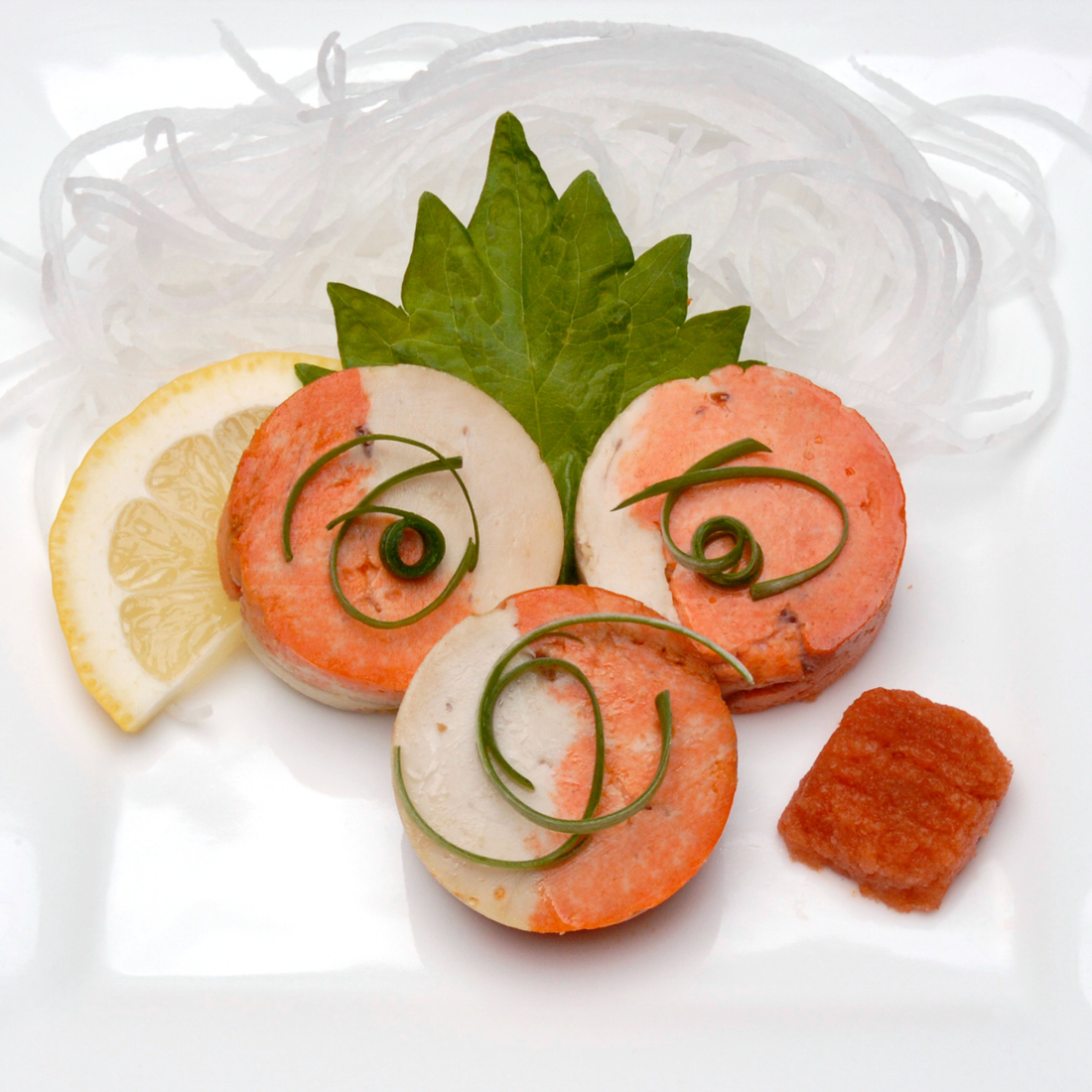
If you want to make it at home, we have two recipes ready. Our Japanese style ankimo recipe walks through slicing and plating with ponzu, and our monkfish liver pâté recipe, created by our owner, turns a single tube into a spread for crackers.

How to Thaw Frozen Ankimo
Thaw it slowly so the texture stays smooth. The best way is overnight in the fridge, which takes about 6 to 12 hours for a small pack. If you are short on time, keep it sealed and submerge it in a bowl of cold water. Never use hot water, and never try to thaw it by heating it, because that ruins the creamy texture that makes ankimo worth eating.
Once it has thawed, slice it with a sharp, thin knife into rounds about a quarter inch thick. For more storage advice across all our seafood, see our guide on how to store seafood.
Frequently Asked Questions
Shop Ankimo from Gloucester
Whether you want a ready-to-serve tube for tonight or whole raw livers to make your own, it all comes from the same wild monkfish landed in Massachusetts. Review each product page for its current pack size and preparation details.
More From Intershell
Keep exploring with these recipes and guides.