

How to Cook Scallops: Perfect Pan-Seared Scallops

 Seafood Recipes
Perfectly cooked scallops have a deep golden crust on the outside and a sweet, tender center. The good news is that searing scallops at home is fast and simple once you know the few rules that separate a restaurant-quality crust from a pale, rubbery disappointment.
This guide covers how to cook sea scallops by pan-searing, which is the fastest and most reliable method. You will learn how to choose the right scallops, how to prep and season them, exact cook times by size, how to tell when scallops are done, and how to fix the common mistakes that stop scallops from browning.
- What Are Pan-Seared Scallops?
- Choosing the Right Scallops
- Dry vs Wet Scallops
- Ingredients and Equipment
- How to Prepare Scallops
- How to Pan-Sear Scallops
- How Long to Cook Scallops
- Temperature and Doneness
- Best Oil and Butter
- Common Mistakes to Avoid
- Other Ways to Cook Scallops
- Pan-Seared Scallops Recipe
- Frequently Asked Questions
What Are Pan-Seared Scallops?
Pan-seared scallops are scallops cooked quickly in a hot, lightly oiled pan so that the natural sugars on the surface caramelize into a golden-brown crust through the Maillard reaction. This crust adds a nutty, savory flavor and a slight crispness, while the inside stays soft, sweet, and just opaque.
Searing is the most popular way to cook sea scallops because it takes under five minutes, needs only a few ingredients, and delivers a restaurant-style result at home. The technique works best with large sea scallops rather than tiny bay scallops, which are better suited to pasta and quick saute dishes.
Choosing the Right Scallops
The scallops you buy matter more than any cooking trick. Three things decide your result: the type of scallop, whether it is dry or wet, and its size.
Sea Scallops vs Bay Scallops
Sea scallops are large, usually one to two inches across, and are the best choice for searing because their size lets them develop a crust before the center overcooks. Bay scallops are small, sweet, and cook in seconds, which makes them better for pasta, chowder, and ceviche than for searing. This guide focuses on sea scallops. For a full breakdown, read Sea Scallops vs Bay Scallops.
Scallop Sizes and Counts
Scallop size is sold by count per pound. A label like U-10 means there are fewer than 10 scallops in a pound, so each one is very large. A label like 20/30 means 20 to 30 scallops per pound, so they are medium. For searing, larger U-10 and 10/20 scallops are easiest because they give you more time to build a crust before the center is done.
Intershell offers sea scallops in sizes including extra-large 10-count, 10/20 count, and 20/30 count. To plan how many to buy for a meal, see our guide on how much seafood per person.
Dry vs Wet Scallops (The Most Important Choice)
This is the single biggest factor in whether your scallops brown. Wet scallops are soaked in a phosphate solution such as STPP, which makes them absorb water. That extra water steams in the pan instead of searing, so wet scallops turn out pale, shrink, and can taste soapy or rubbery. Dry scallops are untreated, so they sear cleanly into a golden crust and taste sweeter.
| Feature | Dry Scallops (Best for Searing) | Wet Scallops |
|---|---|---|
| Treatment | Untreated, no additives | Soaked in a phosphate (STPP) solution |
| Color | Beige or off-white, sometimes slightly rosy | Bright white, glossy, plump |
| Searing | Browns into a golden crust | Releases water and steams, hard to brown |
| Texture | Firm, sweet, tender | Can be spongy or rubbery |
| Flavor | Clean, sweet, ocean flavor | Sometimes a chemical or soapy aftertaste |
Always buy dry scallops when you can. Every scallop Intershell sells is dry and untreated, processed without STPP, Altessa, or phosphate treatments, which is exactly why they sear so well. If you can only find wet scallops, you can improve them by soaking them for 30 minutes in a mix of cold water, lemon juice, and salt, then drying them very thoroughly.
Ingredients and Equipment
Ingredients
- ✓1 lb dry sea scallops (about 12 large U-10 or 10/20 scallops)
- ✓1 tablespoon high smoke point oil (avocado, grapeseed, or canola)
- ✓2 tablespoons butter, for finishing
- ✓Salt and freshly ground black pepper
- ✓2 cloves garlic and 2 sprigs fresh thyme (optional)
- ✓½ lemon, for serving
Equipment
- ✓A heavy cast iron or stainless steel skillet (not nonstick)
- ✓Paper towels for drying the scallops
- ✓Tongs or a fish spatula for flipping
Use a cast iron or stainless steel pan, not nonstick. Searing scallops needs very high heat, and nonstick pans should not be pushed that hot. Heavy pans also hold heat better, so the temperature does not drop when the cold scallops hit the surface.
How to Prepare Scallops Before Cooking
- 1Thaw if frozenIf your scallops are frozen, thaw them in the refrigerator overnight, or place the sealed package in a bowl of cold water for about 30 minutes. Never cook scallops from frozen, as they will release water and steam.
- 2Remove the side muscleLook for the small rectangular tab of tougher tissue on the side of each scallop. Pinch and peel it off. It is edible but turns chewy when cooked, so most cooks remove it.
- 3Pat completely dryThis is the most important prep step. Lay the scallops on paper towels, then press more paper towels on top to blot away all surface moisture. Dry scallops are what give you a crust. Wet scallops steam.
- 4Season right before searingSeason both sides generously with salt and pepper just before the scallops go into the pan. Salting too early pulls moisture back to the surface.
How to Pan-Sear Scallops Step by Step
- 1Heat the pan until very hotSet a cast iron or stainless steel skillet over medium-high to high heat for 2 to 3 minutes. Add the oil. The pan is ready when the oil shimmers and just begins to wisp smoke.
- 2Add the scallops without crowdingPlace the scallops in the pan flat side down, spaced apart with room between each one. They should sizzle on contact. If you crowd them, they steam instead of sear, so work in batches if needed.
- 3Sear undisturbed until a crust formsDo not move the scallops. Let them sear for about 1.5 to 2 minutes until the bottom is deep golden brown. If a scallop sticks when you try to lift it, it is not ready. It will release on its own once the crust forms.
- 4Flip onceTurn each scallop a single time with tongs or a fish spatula. Sear the second side for 30 to 90 seconds depending on size.
- 5Add butter and basteAdd the butter, and the garlic and thyme if using. As the butter foams, tilt the pan and spoon it over the scallops for 30 to 60 seconds. This adds richness and a glossy finish.
- 6Check doneness and serveThe scallops are done when they are opaque, firm to a gentle press, and reach 145°F inside. Remove them immediately so they do not overcook, squeeze lemon on top, and serve right away.
How Long to Cook Scallops
Cook time depends on size. Larger scallops need more time per side. Use these times as a starting point, and always go by the golden crust and an internal temperature of 145°F rather than the clock alone.
| Scallop Size | First Side | Second Side | Total |
|---|---|---|---|
| U-10 (jumbo) | 2 to 2.5 min | 1 to 1.5 min | 3 to 4 min |
| 10/20 (large) | 1.5 to 2 min | 1 min | 2.5 to 3 min |
| 20/30 (medium) | 1 to 1.5 min | 45 to 60 sec | 2 to 2.5 min |
| Bay scallops (small) | Toss in a hot pan | 60 to 90 sec total | About 90 sec |
What Temperature and How to Tell When Scallops Are Done
Scallops should be cooked to a safe internal temperature of 145°F. According to FoodSafety.gov, scallops, shrimp, lobster, and crab are done when the flesh turns pearly or white and opaque.
Besides temperature, look for these signs:
- ✓A deep golden-brown crust on the seared faces
- ✓Sides that have turned from translucent to opaque and pearly
- ✓A firm but springy feel when pressed gently
- ✓Total cook time under about 5 minutes for large scallops
Scallops overcook in seconds. Many chefs pull them when the very center is still slightly translucent, because the residual heat finishes cooking them on the plate. An overcooked scallop becomes tough and rubbery, so it is always better to err on the side of just done.
Best Oil and Butter for Searing Scallops
Use a high smoke point oil to sear and butter to finish. The best oils for cooking scallops are avocado oil, grapeseed oil, canola oil, or refined peanut oil, because they handle the high heat without burning. Butter alone burns at searing temperature and would scorch before the crust forms.
The simple rule is: sear in oil, then add butter at the end for flavor and basting. This gives you a clean crust and a rich, nutty finish without burnt, bitter butter.
Common Scallop Mistakes to Avoid
Almost every scallop problem comes down to one of these. Avoid them and you will get a golden crust every time.
- ✕Using wet, treated scallops that release water and never brown
- ✕Not drying the scallops, so they steam instead of sear
- ✕A pan that is not hot enough, which causes sticking and no crust
- ✕Crowding the pan, which traps steam and prevents browning
- ✕Flipping too soon, which tears the crust and makes them stick
- ✕Overcooking, which turns scallops tough and rubbery
- ✕Using a nonstick pan or low heat, which cannot build a sear
- ✕Leaving the side muscle on, which stays chewy
Other Ways to Cook Scallops
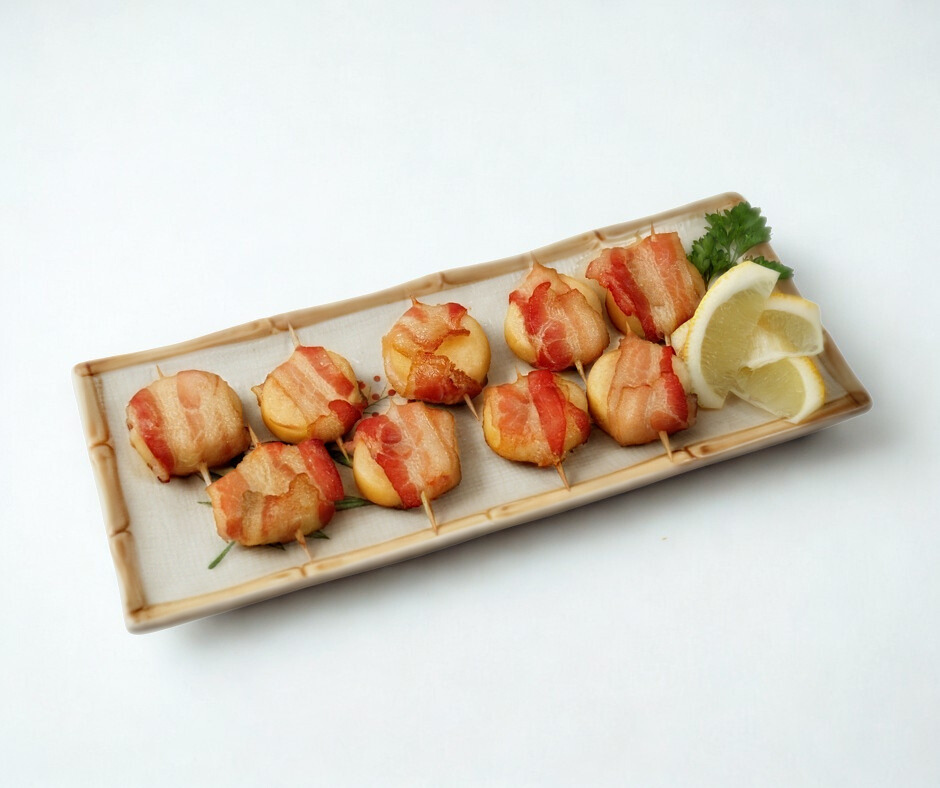
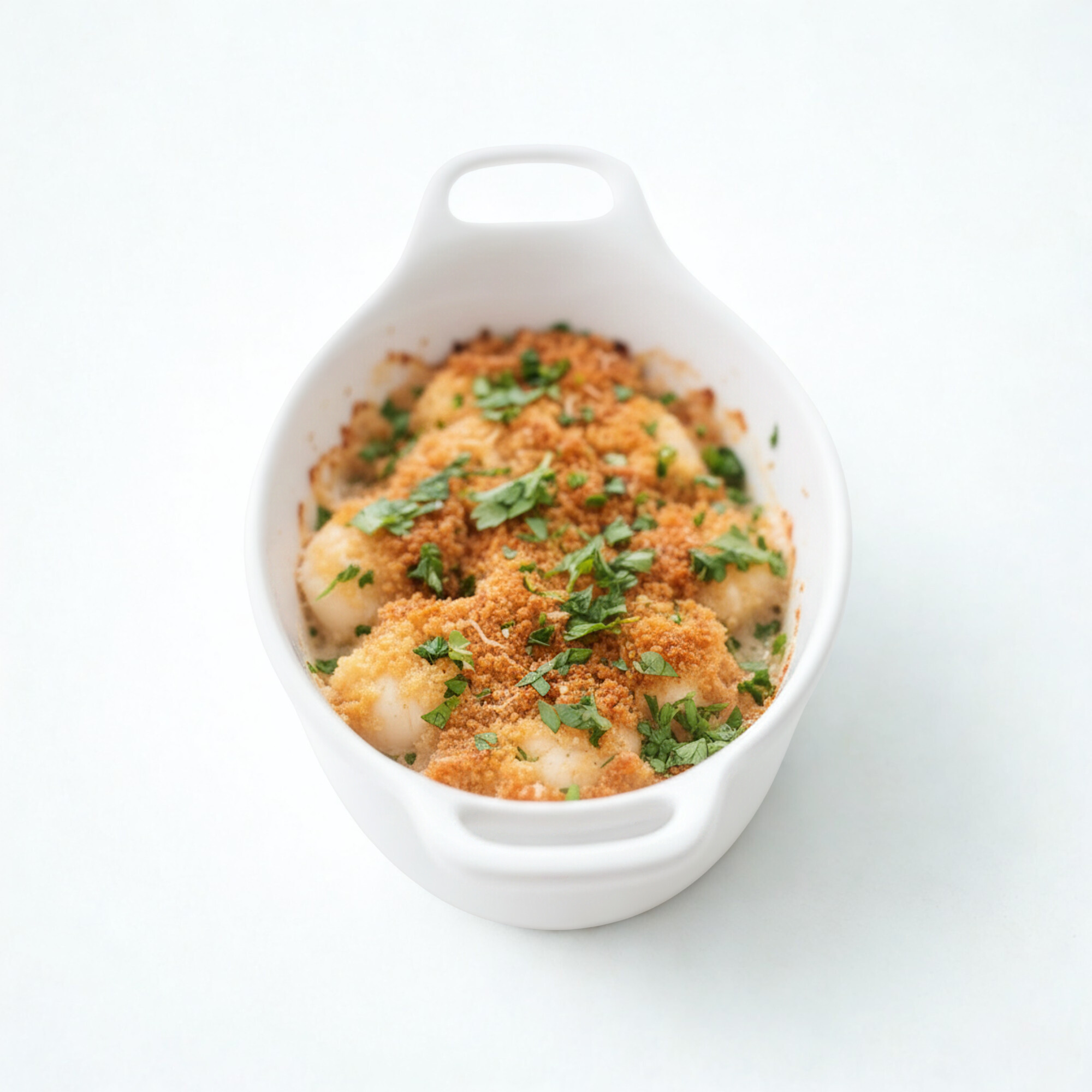
Pan-searing is the most popular method, but scallops are also excellent baked, broiled, grilled, or wrapped in bacon.
- ✓Baked: Bake at 400°F for about 12 to 15 minutes, or layer into a gratin or casserole.
- ✓Broiled: Broil 4 to 5 inches from the heat for 5 to 7 minutes for a quick char.
- ✓Grilled: Thread onto skewers and grill 2 to 3 minutes per side over high heat.
- ✓Bacon-wrapped: Wrap in par-cooked bacon and bake or broil until crisp.
Pan-Seared Scallops Recipe
Perfect Pan-Seared Scallops
- Prep: 10 min
- Cook: 5 min
- Total: 15 min
- Serves: 4
Ingredients
- ✓1 lb dry sea scallops (U-10 or 10/20)
- ✓1 tablespoon avocado or grapeseed oil
- ✓2 tablespoons butter
- ✓2 cloves garlic, smashed
- ✓2 sprigs fresh thyme
- ✓½ lemon, plus salt and pepper
Instructions
- 1Remove the side muscle from each scallop, pat the scallops completely dry, and season both sides with salt and pepper.
- 2Heat a cast iron or stainless steel skillet over medium-high heat until very hot, then add the oil and let it shimmer.
- 3Add the scallops flat side down, spaced apart. Sear undisturbed for 1.5 to 2 minutes until a deep golden crust forms.
- 4Flip once. Add the butter, garlic, and thyme, then tilt the pan and baste the scallops for 30 to 60 seconds.
- 5Cook until the scallops are opaque and reach 145°F inside. Squeeze lemon over the top and serve immediately.
Frequently Asked Questions
Shop Dry Sea Scallops for Searing
Great seared scallops start with great scallops. Intershell ships dry, untreated sea scallops from the docks of Gloucester, sized for the perfect crust.
Scallop Recipes to Try Next
Once you have mastered the sear, put it to work in these Intershell scallop recipes.
For a lighter pasta dish, try Nantucket Bay Scallops with White Wine Pasta.