

Shrimp Sizes Explained: Count Per Pound Chart

 Seafood Guides
Buying shrimp can be confusing when the package says 16/20 or U-15 instead of small, medium, or large. Those numbers are actually the most useful thing on the label. Once you understand shrimp counts, you can pick the perfect size for any recipe every time. This guide explains exactly what shrimp sizes mean.
This guide covers what count per pound means, what the "U" designation stands for, a full shrimp size chart, why size names vary between sellers, and how to choose the best shrimp size for cocktail, scampi, grilling, pasta, and more.
What Does Count Per Pound Mean?
Shrimp are sold by count per pound, which is simply how many individual shrimp it takes to make up one pound. A label like 21/25 means there are between 21 and 25 shrimp in a pound. The single most important rule to remember is that a smaller number means a bigger shrimp, because it takes fewer large shrimp to reach a pound and more small shrimp to reach the same weight.
So a bag of 16/20 shrimp generally contains much larger shrimp than a bag of 41/50 shrimp. Count per pound is a more dependable sizing guide than descriptive names when you compare products in the same form, such as raw peeled shrimp with raw peeled shrimp.
What Does the "U" Mean in Shrimp Sizes?
Some of the largest commonly sold shrimp are labeled with a "U" followed by a number, such as U-10 or U-15. The "U" stands for "under," meaning there are fewer than that many shrimp in a pound. U-15 means under 15 shrimp per pound, and U-10 means under 10 per pound. These sizes are often called colossal or extra colossal. Some sellers may also offer even lower counts, such as U-8.
Shrimp Size Chart
This chart shows common shrimp size names, their count per pound, and typical uses. Keep in mind that size names are general guidelines. Count per pound is a more dependable comparison when the shrimp are sold in the same form, such as shell-on versus shell-on or peeled versus peeled.
| Common Name | Count Per Pound | Shrimp Per Pound | Best For |
|---|---|---|---|
| Extra Colossal | U-10 | Under 10 | Showpiece dishes, stuffing |
| Colossal | U-12 to U-15 | About 10 to 15 | Grilling, stuffed shrimp |
| Extra Jumbo | 16/20 | 16 to 20 | Shrimp cocktail, grilling, peel-and-eat |
| Jumbo | 21/25 | 21 to 25 | Cocktail, scampi, skewers |
| Extra Large | 26/30 | 26 to 30 | Scampi, pasta, skillet, most recipes |
| Large | 31/40 | 31 to 40 | Pasta, tacos, stir-fry |
| Medium | 41/50 | 41 to 50 | Soups, fried rice, salads |
| Small | 51/60 | 51 to 60 | Salads, dips, casseroles |
| Extra Small / Salad | 61/70 and up | 61 to 70 or more | Salads, no chopping needed |
Size names are industry conventions and can vary by seller. Count per pound is generally the more dependable sizing guide for comparable products. Intershell offers sizes such as 16/20 and 21/25.
Why Shrimp Size Names Vary by Seller
For fresh and frozen retail shrimp, descriptive names such as jumbo, large, and medium are not used consistently by every seller. One seller might call 21/25 shrimp "jumbo," while another calls the same count "extra large." This is why the numeric count is generally more useful than the size name when comparing similar products.
This is why count per pound matters. Two bags both labeled "jumbo" can contain different counts, while comparable products labeled 21/25 should contain approximately 21 to 25 shrimp per pound. Always compare the same product form because shell-on, peeled, raw, and cooked shrimp can look different even when the count label is similar.
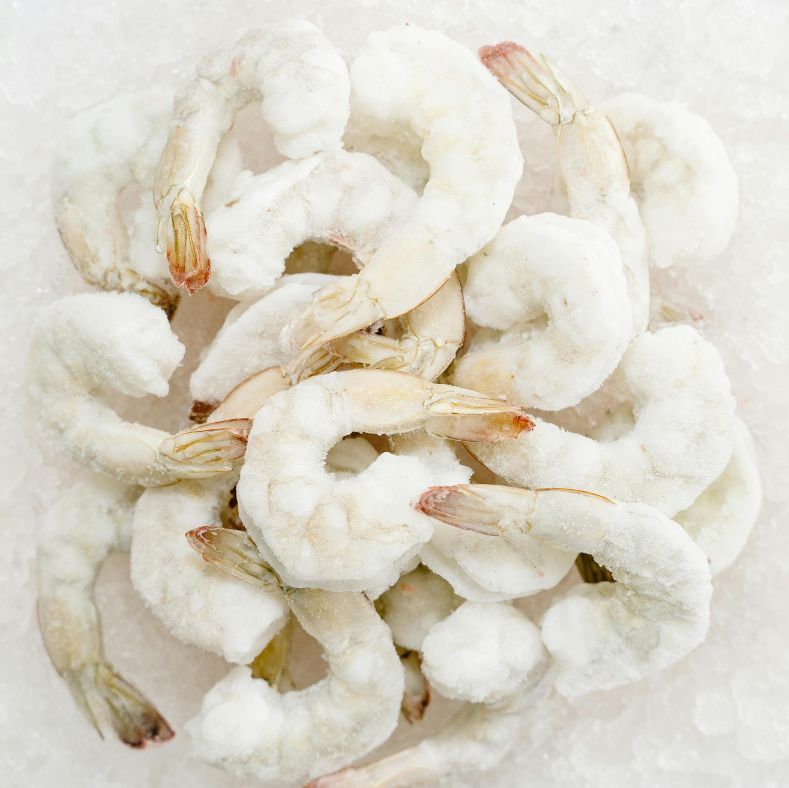
How to Choose the Best Shrimp Size for Every Dish
The right shrimp size depends on the recipe. Larger shrimp make a statement and are often more forgiving during cooking, while smaller shrimp are useful when you want bite-sized pieces spread throughout a dish.
- ✓Shrimp cocktail: 16/20 or 21/25 for an impressive, meaty presentation
- ✓Grilling and skewers: 16/20 or larger so they do not fall through the grates
- ✓Stuffed shrimp: Colossal U-15 or bigger to hold the filling
- ✓Shrimp scampi and pasta: 21/25 or 26/30 for a good balance
- ✓Peel-and-eat and boils: 21/25 to 31/40 shell-on shrimp
- ✓Tacos and stir-fries: 31/40 or 41/50 for bite-sized pieces
- ✓Soups, salads, and fried rice: 41/50 or smaller, no chopping needed
- ✓Fried and coconut shrimp: 16/20 or 21/25 for a satisfying bite
Once you have picked a size, see our guide on how to cook shrimp for step by step methods and cook times.
How Many Shrimp Are in a Pound?
The number of shrimp in a pound is exactly what the count tells you. A pound of 16/20 shrimp holds about 16 to 20 shrimp, a pound of 26/30 holds about 26 to 30, and a pound of 41/50 holds about 41 to 50.
You can use the count as a rough piece estimate, but use a kitchen scale when a recipe requires a specific weight. For example, half a pound of 26/30 shrimp will usually contain approximately 13 to 15 shrimp. Compare counts between products in the same form, because shell-on, peeled, raw, and cooked shrimp may differ in apparent size and usable weight.
How Much Shrimp Per Person?
As a general rule, plan on about 6 to 8 ounces of peeled shrimp per person when shrimp is the main course, or 3 to 4 ounces as an appetizer. For a main-course portion, that is roughly 6 to 10 shrimp at 16/20 count, 8 to 13 shrimp at 21/25 count, or 10 to 15 shrimp at 26/30 count. These are estimates, so use a kitchen scale when portion accuracy matters. For a full breakdown by seafood type, see our seafood portion guide.
Does Shrimp Size Affect Cooking Time?
Yes. Larger shrimp generally take slightly longer to cook, while smaller shrimp can cook in only a few minutes. Cook shrimp until the flesh is firm, pearly, and opaque throughout. A gentle curve can be a useful visual clue, but color, firmness, opacity, and an internal temperature of 145°F (63°C) are more dependable than shape alone. For cook times by size and method, see our full guide on how to cook shrimp.
Frequently Asked Questions
Shop Shrimp by Size
Intershell offers shrimp in several sizes and formats, including chem-free wild-caught domestic Gulf shrimp, raw IQF shrimp, cooked IQF shrimp, and prepared options. Review each product page for its current count, origin, ingredients, and preparation details.
More Shrimp Guides
Keep learning with these Intershell guides.